

{
    "id": 2573,
    "date": "2022-03-26T10:11:52",
    "date_gmt": "2022-03-26T10:11:52",
    "guid": {
        "rendered": "https:\/\/wygplastic.com?p=2573"
    },
    "modified": "2022-04-05T09:41:38",
    "modified_gmt": "2022-04-05T09:41:38",
    "slug": "what-is-polypropylene-pp-and-what-is-it-used-for",
    "status": "publish",
    "type": "post",
    "link": "https:\/\/wygplastic.com\/en\/what-is-polypropylene-pp-and-what-is-it-used-for\/",
    "title": {
        "rendered": "Polypropylene (PP)"
    },
    "content": {
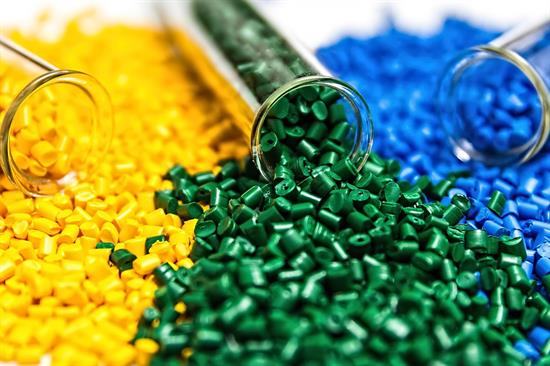
        "rendered": "<div class=\"vc_row wpb_row vc_row-fluid\"><div class=\"wpb_column vc_column_container vc_col-sm-2\"><div class=\"vc_column-inner\"><div class=\"wpb_wrapper\"><\/div><\/div><\/div><div class=\"wpb_column vc_column_container vc_col-sm-8\"><div class=\"vc_column-inner\"><div class=\"wpb_wrapper\"><div class=\"vc_empty_space\"   style=\"height: 32px\"><span class=\"vc_empty_space_inner\"><\/span><\/div>\n\t<div class=\"wpb_text_column wpb_content_element  post-type\" >\n\t\t<div class=\"wpb_wrapper\">\n\t\t\t<p style=\"text-align: center;\">Polypropylene (PP) is a thermoplastic \u201caddition polymer\u201d made from the combination of propylene monomers. It is used in a variety of applications toinclude packaging for consumer products, plastic parts for various industries including the automotive industry, special devices like living hinges, andPolypropylene was first polymerized in 1951 by a pair of Phillips petroleum scientists named Paul Hogan and Robert Banks and later by Italian andGerman scientists Natta and Rehn. It became prominent extremely fast, as commercial production began barely three years after Italian<\/p>\n\n\t\t<\/div>\n\t<\/div>\n<\/div><\/div><\/div><div class=\"wpb_column vc_column_container vc_col-sm-2\"><div class=\"vc_column-inner\"><div class=\"wpb_wrapper\"><\/div><\/div><\/div><\/div><div class=\"vc_row wpb_row vc_row-fluid\"><div class=\"wpb_column vc_column_container vc_col-sm-12\"><div class=\"vc_column-inner\"><div class=\"wpb_wrapper\">\n\t<div class=\"wpb_tabs wpb_content_element  post-type tab-style-two\" data-interval=\"0\">\n\t\t<div class=\"wpb_wrapper wpb_tour_tabs_wrapper ui-tabs vc_clearfix\">\n\t\t\t<ul class=\"wpb_tabs_nav ui-tabs-nav vc_clearfix text-big\"><li><a href=\"#tab-1777cee4-108d-3\">The Characteristics of Polypropylene<\/a><\/li><li><a href=\"#tab-94e49bb9-fdc5-1\">Why is Polypropylene used?<\/a><\/li><li><a href=\"#tab-1647079032500-2-8\">The Advantages of Polypropylene<\/a><\/li><\/ul>\n\t<div id=\"tab-1777cee4-108d-3\" class=\"wpb_tab ui-tabs-panel wpb_ui-tabs-hide vc_clearfix\">\n\t\t\n\t<div class=\"wpb_text_column wpb_content_element\" >\n\t\t<div class=\"wpb_wrapper\">\n\t\t\t<p>chemist,Professor Giulio Natta, first polymerized it.Natta perfected and synthesized the first polypropylene resin in Spain in 1954, and the ability of polypropylene to crystallize created a lot of excitement.By 1957, its popularity had exploded and widespread commercial production began across Europe. Today it is one of the most commonly producedplastics in the world.living hinge. Living hinges are extremely thin pieces of plastic that bend without breaking (even over extreme ranges of motion nearing 360 degrees).They are not particularly useful for structural applications like holding up a heavy door but are exceptionally useful for non load-bearing applications suchas the lid on a bottle of ketchup or shampoo. Polypropylene is uniquely adept for living hinges because it does not break when repeatedly bent.One of the other advantages is that polypropylene can be CNC machined to include a living hinge which allows for faster prototype development and is less expensive than other prototyping methods<\/p>\n<p>Creative Mechanisms is\u00a0unique in our ability\u00a0to machine living hinges from a single piece of polypropylene.\u00a0Another advantage of Polypropylene is that it can be easily copolymerized (essentially combined into a composite plastic) with other polymers likepolyethylene. Copolymerization changes the material properties significantly, allowing for more robust engineering applications than are possible with purepolypropylene (more of a commodity plastic on its own).The characteristics mentioned above and below mean that polypropylene is used in a variety of applications: dishwasher safe plates, trays, cups, etc,opaque to-go containers, and many toys.According to some reports, the current global demand for the material generates an annual market of about 45 million metric tons and it is estimated thatthe demand will rise to approximately 62 million metric tons by 2020.The major end users of polypropylene are the packaging industry, which consumes about 30% of the total, followed by the electrical and equipmentmanufacturing, which uses about 13% each. Household appliances and automotive industries both consume 10% each and construction materials followswith 5% of the market.Other applications together make up the rest of the global polypropylene consumption.Polypropylene has a relatively slippery surface which\u00a0can\u00a0make it a possible substitute for plastics like\u00a0Acetal (POM)\u00a0in low friction applications like\u00a0gearsor for use as a contact point for furniture.Perhaps a negative aspect of this quality is that it can be difficult to bond Polypropylene to other surfaces (i.e. it does not adhere well to certain glues thatwork fine with other plastics and sometimes has to be welded in the event that forming a joint is required).Although polypropylene is slippery at the molecular level, it does have a relatively high coefficient of friction &#8211; which is why acetal,\u00a0nylon, or PTFE wouldbe used instead. Polypropylene also has a low density relative to other common plastics which translates to weight savings for manufacturers anddistributors of injection molded Polypropylene parts.It has exceptional resistance at room temperature to organic solvents like fats\u00a0but is subject to oxidation at higher temperatures (a potential issue during\u00a0injection molding).One of the major benefits of Polypropylene is that it can be manufactured (either through\u00a0CNC<\/p>\n<p><strong>Some of the most significant properties of polypropylene are:<\/strong><\/p>\n<p><strong>Chemical Resistance<\/strong><\/p>\n<p>Diluted bases and acids don\u2019t react readily with polypropylene, which makes it a good choice for containers of such liquids, such as cleaning agents, first-aid products, and more.<\/p>\n<p><strong>Elasticity and Toughness<\/strong><\/p>\n<p>Polypropylene\u00a0will act with elasticity over a certain range of deflection (like all materials), but it will also experienceplastic deformation early on in the deformation process, so it is generally considered a &#8220;tough&#8221; material. Toughness is an engineering term which isdefined as a material&#8217;s ability to deform (plastically, not elastically) without breaking..<\/p>\n<p><strong>Fatigue Resistance<\/strong><\/p>\n<p>Polypropylene retains its shape after a lot of torsion, bending, and\/or flexing. This property is especially valuable for making living hinges.<\/p>\n<p>&nbsp;<\/p>\n<p>&nbsp;<\/p>\n<p><strong>Insulation<\/strong><\/p>\n<p>polypropylene has a very high resistance to electricity and is very useful for electronic components.<\/p>\n<p><strong><u>\u00a0<\/u><\/strong><\/p>\n<p><strong>Transmissivity<\/strong><\/p>\n<p>Although Polypropylene can be made transparent, it is normally produced to be naturally opaque in color.\u00a0Polypropylene can beused for applications where some transfer of light is important or where it is of aesthetic value. If high transmissivity is desired then plastics likeAcrylic\u00a0or\u00a0Polycarbonate\u00a0are better choices.Polypropylene is classified as a \u201cthermoplastic\u201d (as opposed to \u201cthermoset\u201d) material which has to do with the way the plastic responds to heat.Thermoplastic materials become liquid at their melting point\u00a0(roughly 130 degrees Celsius in the case of polypropylene).A major useful attribute about\u00a0thermoplastics is that they\u00a0can be heated to their melting point, cooled, and reheated again without significant degradation.Instead of burning, thermoplastics like polypropylene liquefy, which allows them to be easily\u00a0injection molded\u00a0and then subsequently recycled.By contrast, thermoset plastics can only be heated once (typically during the injection molding process). The first\u00a0heating causes thermoset materials toset (similar to a 2-part epoxy) resulting in a chemical change that cannot be reversed. If you tried to heat a thermoset plastic to a high temperature asecond time it would simply burn. This characteristic makes thermoset materials poor candidates for recycling.<\/p>\n\n\t\t<\/div>\n\t<\/div>\n\n\t<\/div>\n\n\t<div id=\"tab-94e49bb9-fdc5-1\" class=\"wpb_tab ui-tabs-panel wpb_ui-tabs-hide vc_clearfix\">\n\t\t\n\t<div class=\"wpb_text_column wpb_content_element\" >\n\t\t<div class=\"wpb_wrapper\">\n\t\t\t<p>Polypropylene is used in both household and industrial applications. Its unique properties and ability to adapt to various fabrication techniques make itstand out as an invaluable material for a wide range of uses.Another invaluable characteristic is polypropylene\u2019s ability to function as both a plastic material and as a fiber (like those promotional tote bags that aregiven away at events, races, etc).Polypropylene\u2019s unique ability to be manufactured through different methods and into different applications meant it soon started to challenge many of theold alternative materials, notably in the packaging, fiber, and injection molding industries. Its growth has been sustained over the years and it remains amajor player in the plastic industry worldwide.At\u00a0Creative Mechanisms, we have used polypropylene in a number of applications across a range of industries. Perhaps the most interesting exampleincludes our ability to CNC machine polypropylene to include a living hinge for\u00a0prototype living hinge development.Polypropylene is a very flexible, soft material with a relatively low melting point. These factors have prevented most people from being able to properlymachine the material. It gums up. It doesn\u2019t cut clean. It starts to melt from the heat of the CNC cutter. It typically needs to be scraped smooth to getanything close to a finished surface.<\/p>\n<p><strong>What Are The Different Types of Polypropylene?<\/strong><\/p>\n<p>There are two main types of polypropylene available: homopolymers and copolymers. The copolymers are further divided into block copolymers andrandom copolymers.Each category fits certain applications better than the others. Polypropylene is often called the \u201csteel\u201d of the plastic industry because of the various waysin which it can be modified or customized to best serve a particular purpose.This is usually achieved by introducing special additives to it or by manufacturing it in a very particular way. This adaptability is a vital property.<\/p>\n<p><strong>Homopolymer polypropylene<\/strong><\/p>\n<p>Is a general-purpose grade. You can think of this like the default state of the polypropylene material.\u00a0Block copolymer\u00a0polypropylene has co-monomer units arranged in blocks (that is, in a regular pattern) and contain anywhere between 5% to 15% ethyleneEthylene improves certain properties, like impact resistance while other additives enhance other properties<\/p>\n<p><strong>\u00a0<\/strong><\/p>\n<p><strong>Random copolymer<\/strong><\/p>\n<p>polypropylene \u2013 as opposed to block copolymer polypropylene \u2013 has the co-monomer units arranged in irregular or random patternsalong the polypropylene molecule.They are usually incorporated with anywhere between 1% to 7% ethylene and are selected for applications where a more malleable, clearer product isdesired.<\/p>\n<p><strong><u>\u00a0<\/u><\/strong><\/p>\n<p><strong>How is Polypropylene made?<\/strong><\/p>\n<p>Polypropylene, like other plastics, typically starts with the distillation of hydrocarbon fuels into lighter groups called \u201cfractions\u201d some of which are combinedwith other catalysts to produce plastics (typically via polymerization or polycondensation).<\/p>\n<p><strong>Polypropylene for Prototype Development on CNC Machines, 3D Printers, &amp; Injection Molding Machines:<\/strong><\/p>\n<p><strong>3D Printing Polypropylene:<\/strong><\/p>\n<p>Polypropylene is not readily available in filament form for 3D printing.<\/p>\n<p><strong>CNC Machining Polypropylene:<\/strong><\/p>\n<p>Polypropylene is widely used as sheet stock for CNC machine manufacturing. When we prototype a small number of polypropylene parts we typicallyCNC machine them.Polypropylene has gained a reputation as a material that cannot be machined. This is because it has a low annealing temperature, which means that itstarts to deform under heat. Because it is a very soft material in general, it requires an extremely high skill level to be cut with precision.\u00a0CreativeMechanisms\u00a0has been successful in doing so.Our teams can use a CNC machine and cut the polypropylene cleanly and with extremely great detail. In addition, we are able to create\u00a0living hinges withpolypropylene\u00a0that have thickness as little as .010 inches. Making living hinges is a difficult endeavor on its own, which makes using a difficult material likepolypropylene even more impressive.<\/p>\n<p><strong>\u00a0<\/strong><\/p>\n<p><strong>\u00a0<\/strong><\/p>\n<p><strong>Injection Molding Polypropylene:<\/strong><\/p>\n<p>Polypropylene is a very useful plastic for injection molding and is typically available for this purpose in the form of pellets. Polypropylene is easy to molddespite its semi-crystalline nature, and it flows very well because of its low melt viscosity.This property significantly enhances the rate at which you can fill up a mold with the material. Shrinkage in polypropylene is about 1-2% but can varybased on a number of factors, including holding pressure, holding time, melt temperature, mold wall thickness, mold temperature, and the percentage andtype of additives<\/p>\n\n\t\t<\/div>\n\t<\/div>\n\n\t<\/div>\n\n\t<div id=\"tab-1647079032500-2-8\" class=\"wpb_tab ui-tabs-panel wpb_ui-tabs-hide vc_clearfix\">\n\t\t\n\t<div class=\"wpb_text_column wpb_content_element\" >\n\t\t<div class=\"wpb_wrapper\">\n\t\t\t<table width=\"937\">\n<tbody>\n<tr>\n<td width=\"65\"><\/td>\n<td colspan=\"7\" width=\"456\">1. Polypropylene is readily available and relatively inexpensive.<\/td>\n<td width=\"416\"><\/td>\n<\/tr>\n<tr>\n<td width=\"65\"><\/td>\n<td colspan=\"8\" width=\"872\">2. Polypropylene has high flexural strength due to its semi-crystalline nature.<\/td>\n<\/tr>\n<tr>\n<td width=\"65\"><\/td>\n<td colspan=\"5\" width=\"326\">3. Polypropylene has a relatively slippery surface.<\/td>\n<td width=\"65\"><\/td>\n<td width=\"65\"><\/td>\n<td width=\"416\"><\/td>\n<\/tr>\n<tr>\n<td width=\"65\"><\/td>\n<td colspan=\"6\" width=\"391\">4. Polypropylene is very resistant to absorbing moisture.<\/td>\n<td width=\"65\"><\/td>\n<td width=\"416\"><\/td>\n<\/tr>\n<tr>\n<td width=\"65\"><\/td>\n<td colspan=\"8\" width=\"872\">5. Polypropylene has good chemical resistance over a wide range of bases and acids.<\/td>\n<\/tr>\n<tr>\n<td width=\"65\"><\/td>\n<td colspan=\"5\" width=\"326\">6. Polypropylene possesses good fatigue resistance.<\/td>\n<td width=\"65\"><\/td>\n<td width=\"65\"><\/td>\n<td width=\"416\"><\/td>\n<\/tr>\n<tr>\n<td width=\"65\"><\/td>\n<td colspan=\"5\" width=\"326\">7. Polypropylene has good impact strength.<\/td>\n<td width=\"65\"><\/td>\n<td width=\"65\"><\/td>\n<td width=\"416\"><\/td>\n<\/tr>\n<tr>\n<td width=\"65\"><\/td>\n<td colspan=\"5\" width=\"326\">8. Polypropylene is a good electrical insulator.<\/td>\n<td width=\"65\"><\/td>\n<td width=\"65\"><\/td>\n<td width=\"416\"><\/td>\n<\/tr>\n<tr>\n<td width=\"65\"><\/td>\n<td width=\"65\"><\/td>\n<td width=\"65\"><\/td>\n<td width=\"65\"><\/td>\n<td width=\"65\"><\/td>\n<td width=\"65\"><\/td>\n<td width=\"65\"><\/td>\n<td width=\"65\"><\/td>\n<td width=\"416\"><\/td>\n<\/tr>\n<tr>\n<td width=\"65\"><\/td>\n<td width=\"65\"><\/td>\n<td width=\"65\"><\/td>\n<td width=\"65\"><\/td>\n<td width=\"65\"><\/td>\n<td width=\"65\"><\/td>\n<td width=\"65\"><\/td>\n<td width=\"65\"><\/td>\n<td width=\"416\"><\/td>\n<\/tr>\n<\/tbody>\n<\/table>\n<p><strong>What are the Disadvantages of Polypropylene?<\/strong><\/p>\n<table width=\"747\">\n<tbody>\n<tr>\n<td colspan=\"5\" width=\"747\">1. Polypropylene has a high thermal expansion coefficient which limits its high temperature applications.<\/td>\n<\/tr>\n<tr>\n<td colspan=\"2\" width=\"703\">2. Polypropylene is susceptible to UV degradation.<\/td>\n<td width=\"15\"><\/td>\n<td width=\"15\"><\/td>\n<td width=\"15\"><\/td>\n<\/tr>\n<tr>\n<td colspan=\"2\" width=\"703\">3. Polypropylene has poor resistance to chlorinated solvents and aromatics.<\/td>\n<td width=\"15\"><\/td>\n<td width=\"15\"><\/td>\n<td width=\"15\"><\/td>\n<\/tr>\n<tr>\n<td colspan=\"3\" width=\"718\">4. Polypropylene is known to be difficult to paint as it has poor bonding properties.<\/td>\n<td width=\"15\"><\/td>\n<td width=\"15\"><\/td>\n<\/tr>\n<tr>\n<td width=\"688\">5. Polypropylene is highly flammable.<\/td>\n<td width=\"15\"><\/td>\n<td width=\"15\"><\/td>\n<td width=\"15\"><\/td>\n<td width=\"15\"><\/td>\n<\/tr>\n<tr>\n<td colspan=\"2\" width=\"703\">6. Polypropylene is susceptible to oxidation.<\/p>\n<p>&nbsp;<\/td>\n<td width=\"15\"><\/td>\n<td width=\"15\"><\/td>\n<td width=\"15\"><\/td>\n<\/tr>\n<tr>\n<td width=\"688\"><\/td>\n<td width=\"15\"><\/td>\n<td width=\"15\"><\/td>\n<td width=\"15\"><\/td>\n<td width=\"15\"><\/td>\n<\/tr>\n<\/tbody>\n<\/table>\n<p>Despite its shortcomings, polypropylene is a great material overall. It has a unique blend of qualities that aren\u2019t found in any other material which makes itan ideal choice for many projects<\/p>\n<p>&nbsp;<\/p>\n<p>&nbsp;<\/p>\n<p>&nbsp;<\/p>\n<p>&nbsp;<\/p>\n<p><strong>What are the properties of Polypropylene?<\/strong><\/p>\n<table width=\"1031\">\n<tbody>\n<tr>\n<td width=\"469\">Property<\/td>\n<td width=\"121\">Value<\/td>\n<td width=\"65\"><\/td>\n<td width=\"65\"><\/td>\n<td width=\"74\"><\/td>\n<td width=\"65\"><\/td>\n<td width=\"65\"><\/td>\n<td width=\"106\"><\/td>\n<\/tr>\n<tr>\n<td width=\"469\">Technical Name<\/td>\n<td colspan=\"2\" width=\"186\">Polypropylene (PP)<\/td>\n<td width=\"65\"><\/td>\n<td width=\"74\"><\/td>\n<td width=\"65\"><\/td>\n<td width=\"65\"><\/td>\n<td width=\"106\"><\/td>\n<\/tr>\n<tr>\n<td width=\"469\">Chemical Formula<\/td>\n<td colspan=\"4\" width=\"326\">Polypropylene Molecular Composition\u00a0\u00a0\u00a0(C3H6)n<\/td>\n<td width=\"65\"><\/td>\n<td width=\"65\"><\/td>\n<td width=\"106\"><\/td>\n<\/tr>\n<tr>\n<td width=\"469\">Resin Identification Code (Used For Recycling)<\/td>\n<td colspan=\"7\" width=\"562\">Polypropylene (PP) Resin Identification Code 5 (For Plastic Recycling Purposes)<\/td>\n<\/tr>\n<tr>\n<td width=\"469\">Melt Temperature<\/td>\n<td width=\"121\">130\u00b0C (266\u00b0F)<\/td>\n<td width=\"65\"><\/td>\n<td width=\"65\"><\/td>\n<td width=\"74\"><\/td>\n<td width=\"65\"><\/td>\n<td width=\"65\"><\/td>\n<td width=\"106\"><\/td>\n<\/tr>\n<tr>\n<td width=\"469\">Typical Injection Mold Temperature<\/td>\n<td colspan=\"2\" width=\"186\">32 &#8211; 66 \u00b0C (90 &#8211; 150 \u00b0F)<\/td>\n<td width=\"65\"><\/td>\n<td width=\"74\"><\/td>\n<td width=\"65\"><\/td>\n<td width=\"65\"><\/td>\n<td width=\"106\"><\/td>\n<\/tr>\n<tr>\n<td width=\"469\">Heat Deflection Temperature (HDT)<\/td>\n<td colspan=\"3\" width=\"251\">100 \u00b0C (212 \u00b0F) at 0.46 MPa (66 PSI)<\/td>\n<td width=\"74\"><\/td>\n<td width=\"65\"><\/td>\n<td width=\"65\"><\/td>\n<td width=\"106\"><\/td>\n<\/tr>\n<tr>\n<td width=\"469\">Tensile Strength<\/td>\n<td colspan=\"2\" width=\"186\">32 MPa (4700 PSI)<\/td>\n<td width=\"65\"><\/td>\n<td width=\"74\"><\/td>\n<td width=\"65\"><\/td>\n<td width=\"65\"><\/td>\n<td width=\"106\"><\/td>\n<\/tr>\n<tr>\n<td width=\"469\">Flexural Strength<\/td>\n<td colspan=\"2\" width=\"186\">41 MPa (6000 PSI)<\/td>\n<td width=\"65\"><\/td>\n<td width=\"74\"><\/td>\n<td width=\"65\"><\/td>\n<td width=\"65\"><\/td>\n<td width=\"106\"><\/td>\n<\/tr>\n<tr>\n<td width=\"469\">Specific Gravity<\/td>\n<td width=\"121\">0.91<\/td>\n<td width=\"65\"><\/td>\n<td width=\"65\"><\/td>\n<td width=\"74\"><\/td>\n<td width=\"65\"><\/td>\n<td width=\"65\"><\/td>\n<td width=\"106\"><\/td>\n<\/tr>\n<tr>\n<td width=\"469\">Shrink Rate<\/td>\n<td colspan=\"3\" width=\"251\">1.5 &#8211; 2.0 % (.015 &#8211; .02 in\/in)<\/td>\n<td width=\"74\"><\/td>\n<td width=\"65\"><\/td>\n<td width=\"65\"><\/td>\n<td width=\"106\"><\/td>\n<\/tr>\n<\/tbody>\n<\/table>\n\n\t\t<\/div>\n\t<\/div>\n\n\t<\/div>\n\n\t\t<\/div>\n\t<\/div>\n<\/div><\/div><\/div><\/div>",
        "protected": false
    },
    "excerpt": {
        "rendered": "<p>Polypropylene (PP) is a thermoplastic \u201caddition polymer\u201d made from the combination of propylene monomers. It is used in a variety of applications toinclude packaging for consumer products, plastic parts for various industries including the automotive industry, special devices like living hinges, andPolypropylene was first polymerized in 1951 by a pair of Phillips petroleum scientists named&hellip;<\/p>",
        "protected": false
    },
    "author": 1,
    "featured_media": 2577,
    "comment_status": "open",
    "ping_status": "open",
    "sticky": false,
    "template": "",
    "format": "standard",
    "meta": {
        "footnotes": ""
    },
    "categories": [
        19
    ],
    "tags": [],
    "class_list": [
        "post-2573",
        "post",
        "type-post",
        "status-publish",
        "format-standard",
        "has-post-thumbnail",
        "hentry",
        "category-blog",
        "category-19",
        "description-off"
    ],
    "_links": {
        "self": [
            {
                "href": "https:\/\/wygplastic.com\/en\/wp-json\/wp\/v2\/posts\/2573",
                "targetHints": {
                    "allow": [
                        "GET"
                    ]
                }
            }
        ],
        "collection": [
            {
                "href": "https:\/\/wygplastic.com\/en\/wp-json\/wp\/v2\/posts"
            }
        ],
        "about": [
            {
                "href": "https:\/\/wygplastic.com\/en\/wp-json\/wp\/v2\/types\/post"
            }
        ],
        "author": [
            {
                "embeddable": true,
                "href": "https:\/\/wygplastic.com\/en\/wp-json\/wp\/v2\/users\/1"
            }
        ],
        "replies": [
            {
                "embeddable": true,
                "href": "https:\/\/wygplastic.com\/en\/wp-json\/wp\/v2\/comments?post=2573"
            }
        ],
        "version-history": [
            {
                "count": 11,
                "href": "https:\/\/wygplastic.com\/en\/wp-json\/wp\/v2\/posts\/2573\/revisions"
            }
        ],
        "predecessor-version": [
            {
                "id": 2632,
                "href": "https:\/\/wygplastic.com\/en\/wp-json\/wp\/v2\/posts\/2573\/revisions\/2632"
            }
        ],
        "wp:featuredmedia": [
            {
                "embeddable": true,
                "href": "https:\/\/wygplastic.com\/en\/wp-json\/wp\/v2\/media\/2577"
            }
        ],
        "wp:attachment": [
            {
                "href": "https:\/\/wygplastic.com\/en\/wp-json\/wp\/v2\/media?parent=2573"
            }
        ],
        "wp:term": [
            {
                "taxonomy": "category",
                "embeddable": true,
                "href": "https:\/\/wygplastic.com\/en\/wp-json\/wp\/v2\/categories?post=2573"
            },
            {
                "taxonomy": "post_tag",
                "embeddable": true,
                "href": "https:\/\/wygplastic.com\/en\/wp-json\/wp\/v2\/tags?post=2573"
            }
        ],
        "curies": [
            {
                "name": "wp",
                "href": "https:\/\/api.w.org\/{rel}",
                "templated": true
            }
        ]
    }
}